Thursday, February 17, 2011

Local Bike Maps

One thing I have found to be quite valuable for route planning is a local bike map. Sure the Google Bike Maps announced about a year ago are handy. And there are various web sites to help plan routes:


Really there are too many to list. If I missed your favorite add a comment and let us all know about it.

But I really like to sit at the table with a large foldout copy of a map and figure out new routes to try. I have discovered that many communities have bike maps. These will show bike routes, bikes lanes, and bike trails at the very least. You can find them online (usually as PDF files), but I like having a hardcopy. The places I have been have free large hard copies at the local bike shops. If you are searching for one online bike map will tend to find it. They are often combined bike and walk/pedestrian maps. I think that is because that is the way most community budgets work - combining all non-car stuff together.

I have done this with my local Cary map, a Las Vegas map and a San Antonio map. I just pulled up a Nashville map because I am heading there for a few days soon. Which reminds me, I want to try and setup a visit with Walk/Bike Nashville while I am there. Should be at least one good blog post coming if I can set that up.

Tuesday, February 15, 2011

Bikes, Busses, Cars, and Trains

Mixed mode commutes might be just the ticket to get you commuting by bike. Some people are able to bike to a train, ride the train to work and return the same way. If you can manage this in all weather you might even be able to completely give up one car in your family. Getting rid of a car is hitting the jackpot. Not only do you save on gas, but the cost of the car, insurance, inspections, tires, oil changes and other maintenance. You not only save money, but you save all the time spent on keeping your car going as well.

Some people are able to combine a bike with a bus. Many places, the bus can also carry your bike allowing you to ride from home to the bus stop, and from the bus stop to your workplace on the other end. This is another scenario that has the potential to let you give up one car in your family.

The final combination is the one I still use, car and bike. For me I drive about 4 miles and park at a neighborhood club house. From there I can bike about 12 miles to work on a round about path that avoids most traffic. There are two reasons I drive the part closest to my house. One is that it would be pretty far to ride both ways every day. But the most important reason is that the roads closest to my house are narrow but heavily traveled. There is not much shoulder and gravel driveways often spill onto the shoulder. The traffic is not very patient when you drive your car the speed limit, 45 mph. In one stretch I get passed by impatient drivers who can't go the speed limit at least once a week. I worry about what these drivers would be like if I was on my bike. One good thing about driving and riding is that you can vary your distance. This makes it a good way to get started. You can pick a shopping center or other good parking that is nearer your work. Ride that for awhile until you are ready to ride farther. Of course this flexibility comes at the cost of not being able to get rid of a car.

These are just some of the ways you can find to include biking in your commute. I hope it will spark some imaginations and encourage people to give it a try.

Monday, February 14, 2011

GPS After an Accident

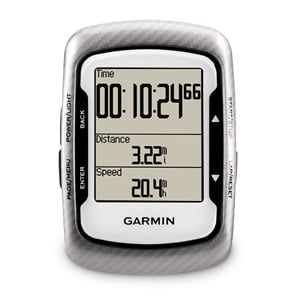
I ran across an interesting story I wanted to share that points out a different use for a GPS on your bike. I often use the Plus3Network iPhone application on my commute to record my ride and earn money for World Bicycle Relief. And many riders use a GPS to record their ride and improve their training. But UCI Professional Track cyclist Ryan Sabga of Black Dog Racing found another use for his Garmin Edge 500.

You can read Ryan's full story, but here is my recap. Ryan was hit by a car in Denver. When the police arrived the driver's account did not match Ryan's. The police said with no further evidence they could not issue the driver a ticket. When Ryan got home, he realized his Garmin did hold further evidence. While the police were not interested in re-opening the file, Ryan had better luck when he contacted the driver's insurance company. The driver had already started a claim to get the car hood repaired where a cyclist had "run into it". Ryan shared the Garmin data with the insurance company. The data showed him stopping properly at the stop sign and then proceeding. Then he was suddenly moving sideways and it even showed a spike in Ryan's heart rate when he was hit. The next day, the insurance company called Ryan back and said they were taking full responsibility for the damages to him and his bike. I just hope the driver was dropped by her insurance company for filing a false report.

Here is a shot of Ryan.

And this case is evidently not unique. Steve Magas on Ohio Bike Lawyer mentions two other involving cyclists and powerful GPS evidence.

Thursday, February 10, 2011

Waterproof Gloves, Not Foolproof Gloves

There is a saying that it is hard to make things foolproof because fools are just so ingenious. That seems to be the case of my first day wearing my new waterproof cycling gloves.

Last Friday, I was taking a rest day from commuting in preparation for my first brevet. I decided to drop by a bike shop on my way home. Having checked the weather, I knew some waterproof gloves would be a good addition. I was also checking the sales on winter gear in general.

They had several brands and models of waterproof, winter gloves. I settled on a pair of Specialized Radiant gloves. They were 20% off. I was eyeing a jacket/heavy jersey, but it wasn't for the rain, so I decided to wait and see if I find something else or if it gets discounted further as the weather warms up.

So I started the all day ride on Saturday wearing my new gloves. I brought a lighter, but full fingered, pair in case it got warmer in the afternoon. It started raining within the first 10 minutes of the ride, so the gloves were getting a test. And so was the fool.

I had on my rain jacket with nice tight cuffs, but I had pulled the gloves over the cuffs. Now picture your self on your bike. Your arms slope down to your hands. When it is raining, the water runs down this same way. In my case slowly into the lining on the cuffs of the gloves. They gloves slowly wicked this water inside. So they got wet and heavy, but I did not notice until they were too wet to dry that day. Still I have to say they did stay warm if not dry.

To make sure there was not a problem with the gloves waterproofing, I did a little experiment after they dried out. I put them on and ran water on them under the sink. I was careful not to get water into cuffs. They performed perfectly. The outer layer is wet to the feel (from the outside), but the inside of the gloves stayed perfectly dry.

So next time I will pull my jacket cuffs over the gloves. I will have to find a different way to be the fool.


Wednesday, February 9, 2011

My First Brevet

This is not about commuting but another ride I did, a 200k brevet. I will say that some of the things I learned from commuting helped on this ride which was part of a randoneuring series offered by Bicycle For Life. Plus the overall attitude of bicycle commuting and randoneuring share some things.


RUSA defines randonneuring like this:

Randonneuring is long-distance unsupported endurance cycling. This style of riding is non-competitive in nature, and self-sufficiency is paramount. When riders participate in randonneuring events, they are part of a long tradition that goes back to the beginning of the sport of cycling in France and Italy. Friendly camaraderie, not competition, is the hallmark of randonneuring.

Like any kind of cycling, people have different goals, but a common one for randonneurs is to ride Paris-Brest-Paris (PBP) which happens every 4 years including 2011. To qualify to ride PBP, you have to ride a 200K, 300K, 400K, and 600K brevet. The day I rode there were 200K, 300K, and 600K riders. In fact I think there were more doing the 600K than any other distance.

So I did the longest ride I have ever done, but it was the shorest route being offered. But I did find the common attitude of being self sufficient and pushing through are certainly shared between randoneering and bicycle commuting.

In particular this ride was done in rainy and cold weather and finished after dark. So my experience with choosing clothes for daily commuting conditions gave my confidence that I was picking the right thing to wear. Finishing after dark was not a problem because I knew my lights would work. After all, I have been using them everyday, twice a day, while commuting during the short winter days.

My only real problem was with the new waterproof gloves I bought just before the ride. I will talk about them more tomorrow.

Tuesday, February 8, 2011

Mini-Rant About Transportation Funding

I want to touch on a recent news story where US Representative Duncan Hunter of California said having bicycle funding in the transportation bill is unconstitutional. The heart of Representative Hunter's statement comes from thinking cycling is recreational rather than transportation. Without getting into Constitutional law which I don't feel qualified to discuss, I would like to comment on these ideas.

Many of us who ride for transportation would dispute that cycling is just recreational. Also a significant number of miles people drive in cars, including me, are also recreational. If I drive back and forth to work all week that is about 100 miles. If I drive to the beach of mountains for the weekend that is 200-400 miles.

I poked around a little and found some things in the documents our country is built on that I would interpret to cover the support of cycling infrastructure. The Declaration of Independence includes the words pursuit of happiness. All the cyclists I know riding for transportation would say that cycling gives them more happiness than driving. The Declaration of Independence goes on to say government should organize its powers in such form, as to them shall seem most likely to effect their Safety and Happiness. So if the government is building transportation infrastructure it seems imperative to consider the safety of all users. After all we don't let the truckers just do what they want. There are plenty of rules to make their use of the transportation network safer. The same is true of trains and planes.

It seems like I could go on and on, but I will stop here and see if others would like to comment.

On a related note, Tom Bowden had an article on Commute By Bike discussing How to Talk About Cycling to a Conservative that is worth a read.

Monday, February 7, 2011

Bicycle Podcasts

I thought I would share a list of the bicycle podcasts I listen to*. This is just one bicycle bloggers opinion, so don't keep it from sharing yours. I try to mention the sound quality mostly because it is a pet peeve of mine, but also if you want to listen while riding it helps if the volume and clarity are consistent. I don't listen too loud when I am riding, so good quality keeps me from missing things.

VeloReviews - The podcast is an extension of the web site and offers practical advice for riding, training, and maintaining your bike. Nice style and banter. You can almost always hear what is going on.

Bicycle Radio - covers wide range of topics. I have often discovered new cycling events and causes from this show. Very casual style with lots of banter. You can hear the main people well, but some of the others are hard to hear. They struggle with their phone interviews.

Bike Show - This is an actual radio show in London. There is usually some general news, some about racing but mostly about more ordinary cycling. The interviews are very good, ranging from master frame makers to the new Olympic Velodrome. The sound is good. I want to know how he gets good recordings when interviewing a person while they are both riding bikes in London.

Two Johns - The Two Johns cover international news, local (meaning US with some weight on Ohio and North Carolina) news, and lots of email questions. They can be a little scattered but in an entertaining way. They have improved their sound recently.

The FredCast - Just having the single voice of David Bernstein, gives this podcast a different feel. David has lots of industry connections and that gives him a different perspective. There is lots of racing news but also bicycle industry in general. The shows have lots of information but not too much entertainment.The sound is nearly flawless.

The Spokesmen is a round table discussion with a rotating cast of industry insiders. They have lots of information and passion for almost all aspects of cycling. There is plenty of talk about racing but also general industry and current events related to cycling. David Bernstein of the FredCast is the host most often and the sound quality reflects that. It is almost as good as the FredCast. The multiple people via Skype makes it more challenging but it is still very good.

Velo Club Don Logan is a new podcast from Scotland. The accents are pretty heavy, but I can follow it just fine. They talk about road (mostly racing and some touring) and mountain. Their local news is certainly about Scotland and the UK, but it is still generally interesting. It can give you some good ideas of places to ride if you visit. The sound is a little uneven, but I am hoping a little experience will smooth it out.

WJCU - The Outspoken Cyclist - I just found this one. I haven't heard enough to give an opinion, but I suspect it is a keeper.

I know there are probably more Podcasts out there, so chime in with your favorites.


* I know this sentence ends in a preposition, but that is the way people talk. It does remind me of a story. Being a former student at Texas A&M I will tell it with an Aggie. You will have to supply your own accents. So am Aggie goes to graduate school at Harvard. On arriving on campus, he asks a student walking by, "Can you tell me where is the library at"? The Harvard student responds "At Harvard, we do not end out sentences with a preposition". So the Aggie corrects the query "Can you tell me where the library is at, jerk".